2nd Year Personal Research
Project
You must think about the processes
that you were introduced to through the workshops this year (Decorative, Glaze,
Plaster, etc.). Select a maker whose work you admire who applies a selected
range of these processes.
Introduce us briefly to their work
and their concepts, but the main focus of your Research and presentation should
be on the technical aspects of Materials and Processes.
Delivery: You must put together a 4
slide illustrated Powerpoint Presentation to present your research verbally to
your peers. Those attending should be left with a clear understanding of the
techniques as applied by that particular maker and how the effects can be
achieved if they were to apply the techniques to their own work.
You must also present some practical
samples that you have made as part of your research project (test tiles or
other, related to the content) that add further understanding for your peers.
Eva Hild is a ceramic
artist she is part of the new generation of Swedish art craft and design makers
exploring the boundaries between art, craft and design.
A graduate of Göteborg
University's School of Design and Crafts, Sweden, Eva Hild has exhibited widely
and is represented in important private and public collections.

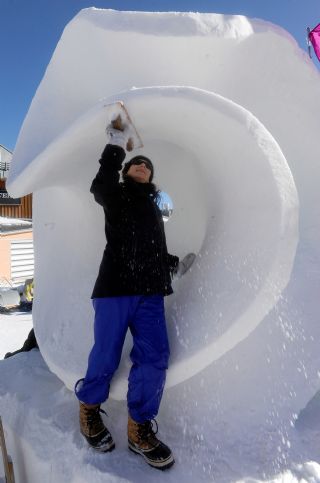


Building her large scale sculpture pieces
using coils of clay, it takes weeks for her to coil and scrape her sculptures Hild's sculptures grow slowly, contemplatively, and the work
cannot be hurried along. She soothes out the seams and rounds off the forms
using a metal scraper the clay is smooth, malleable and
leathery which enables her to produce complex forms
Through hand-building,
Hild gradually builds up her sculptures, change the direction
and make the shape as a hole connect, making the forms veer off into loop, twist and billow in one direction or another while having smooth surfaces all with the same thickness.
and make the shape as a hole connect, making the forms veer off into loop, twist and billow in one direction or another while having smooth surfaces all with the same thickness.
Her material is white
porcelain clay that includes graded molochite grogs to ensure low shrinkage
during firing also this grade of clay does not readily collapse it can be used
to make large forms
When the clay is quite
dry she spends hours in a fume-cup-board, sanding away at the surfaces.


The sculpture pieces
are allowed to dry slowly and are finally fired twice at stoneware temperature
1230o -1250o degrees Celsius for up to 48 hours and finally treated with white
silicate slurry of kaolin which forms a white colour coating. Her kiln sets the
limit to the size of her work. Each piece takes from two to three months of
work.
"Influence,
pressure, strain these words have been the foundation for my current projects
that comprise communicating the theme in large, hand-built clay forms.”
Footnote
1
“People
have always been fascinated by the relationship between the interior and
exterior worlds: the dualism between inside and outside, content and form,
feeling and shape, impression and expression, explanations and religious
concepts.” Footnote 2
Given the complexity of
Hild's forms one might imagine that she would use a
computer to calculate them. This is not the case, she makes a few sketches in
advance but the details cannot really be foreseen. Eva Hild's way of working involves endless patience and all the
skills of her craft. Her complex forms cannot be cast or rolled out this is why
she uses clay for its plastistae allowing itself to be constantly reworked.
Without this use of
computer and mathematical calculation Eva’s forms have a timeless quality about
them as though they had come about through natural processes. These
are also a complex yet continuous flows of reverberating line create organic
associations without looking like any specific thin. The absence of colour and
the perfection of surfaces keep Eva’s sculptural forms firmly in the area of abstraction.


“Eva Hild
achieves a unity of inside and outside, starting from the inside and employing
not the basic geometric forms but organic forms from the natural world. Most
important of all is the air that fills the cavities the emptiness. What she is
trying to do is to visualise something that cannot actually be seen.”
Footnote
3
As the viewer’s gaze
follows the winding cavities, the shadows and surfaces seem gradually to change
form. They reflect varying degrees of external and internal pressures. What
makes Hild's forms beautiful for me is there is no concentrate on any
particular part there is no focus point. Her Sculptures have no front no best
pictorial viewpoint her works convey flowing movement.
Eva’s works shows
context of her minimalist Scandinavian living, with her shear white/black
surfaces also there is a feminine curvature gracefulness within her
work.
“Eva has found a personal, wordless
language in which to express feelings, whether she is communicating a whisper,
pain or joy. And those of us who behold her work are reminded of how our own
inner emptiness feels.”
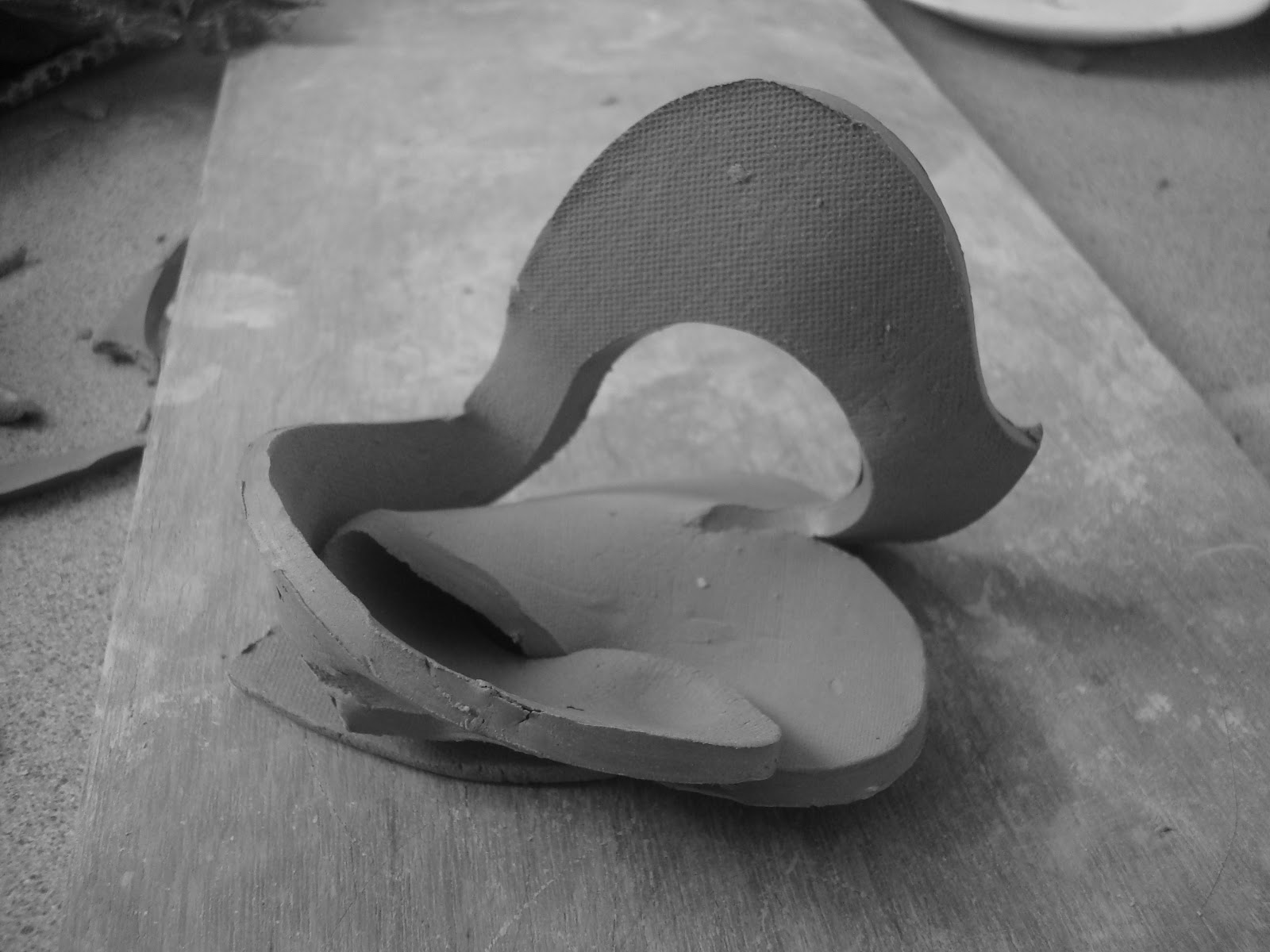
Here is my responance to 2nd Year Personal Research Project
1st working in paper then translate the same format into clay.
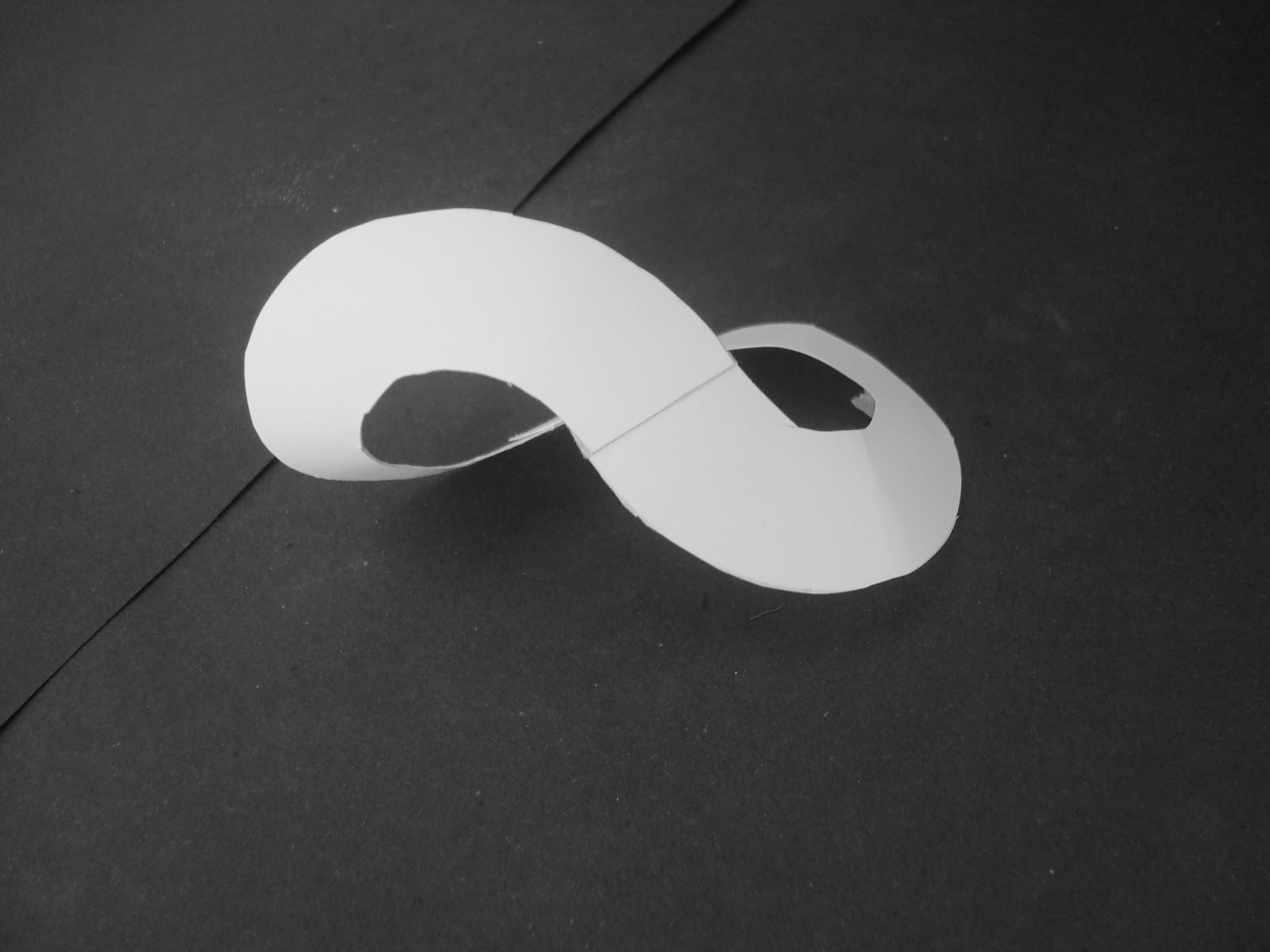


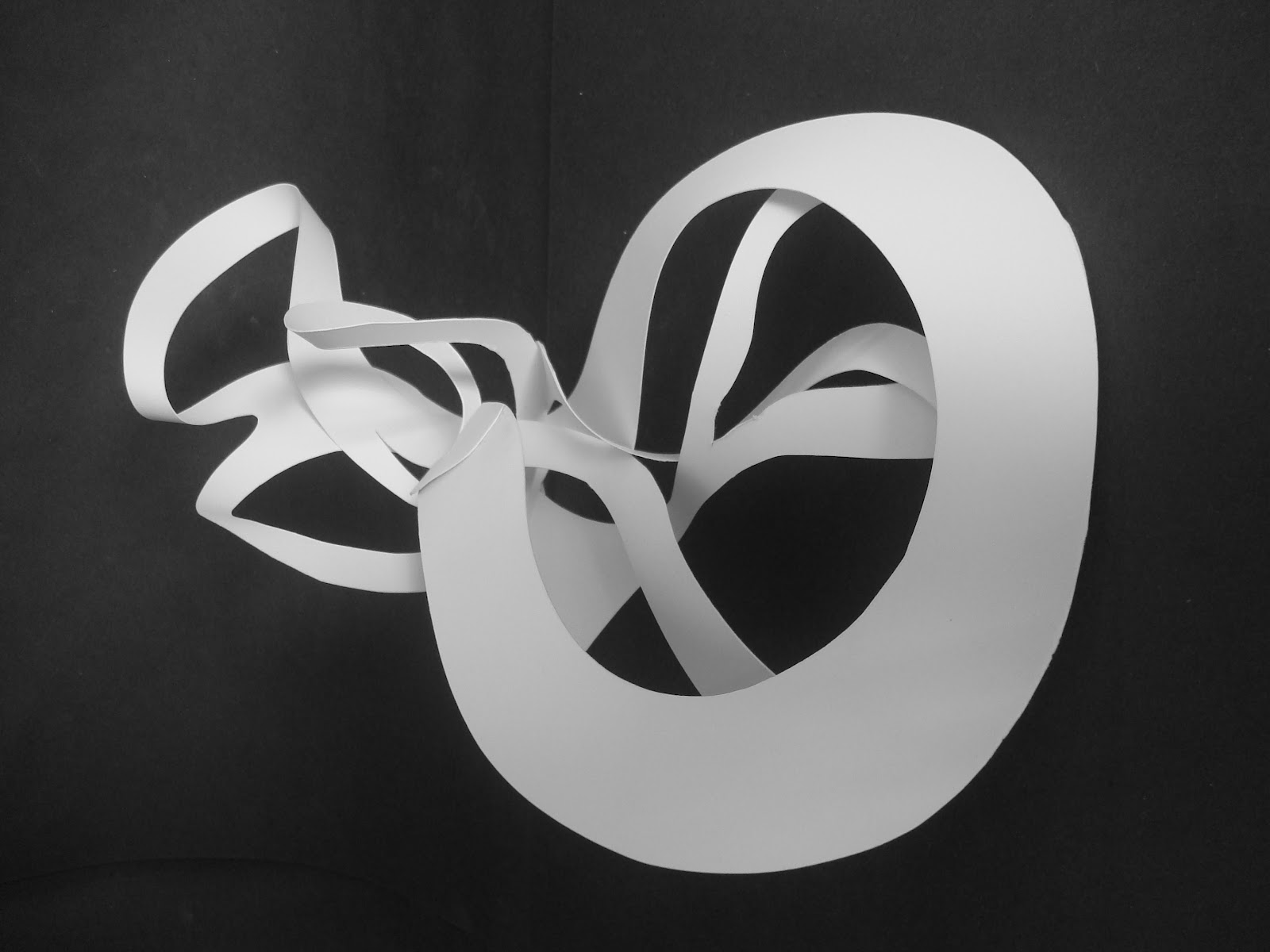
Clay work rolling out slabs then cuting into it.




No comments:
Post a Comment